
Table of Contents
ToggleManta ray seasons in the Maldives: Overview
If you are an ocean enthusiast, the manta ray season in the Maldives is the best time to visit. This season lasts from November to May, when you can witness thousands of manta rays gather to feed themselves in plankton-rich waters. You can watch these creatures in a black diamond shape from the aerial view and in larger numbers. This mass feeding event is also called a “manta storm”, as it creates beautiful circular formations, just like a cyclone for this you would need to visit to Maldives.
How the monsoon affects the movement of manta rays and whale sharks
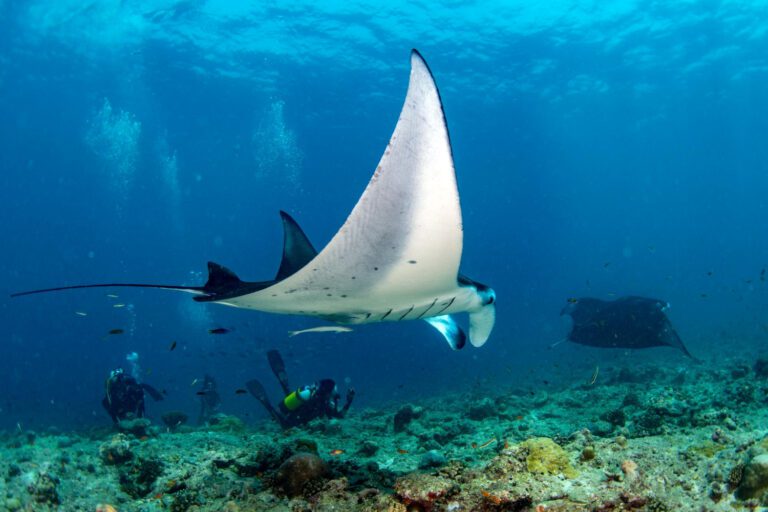
Did you know manta rays switch their usual feeding locations with the effects of the monsoon? Yes, these creatures swim across the ocean, where the water is high in nutrient availability, such as plankton-rich water. These migrations take place seasonally between the east and the west sides of the atolls, known as the manta ray season in the Maldives. This movement occurs primarily during the two major monsoons below.
- Northeast monsoons usually occur from December to April, when manta rays move to the other side of the islands to find food and continue feeding.
- The Southwest Monsoon occurs between May and November, when these creatures come to places like Hanifaru Bay to feed during this period.
Where to see mantas and whale sharks in the Maldives
If you follow the seasons across the Maldives, each atoll tells you a different manta ray story.
- From December to April, you can begin your journey at Sola’s Corner. During the northeast monsoon, you’ll see manta rays gliding calmly, making for a close and peaceful encounter.
- As you move on, you’ll discover Fushifaru Thila. Between September and March, you can watch manta rays return to this cleaning station, circling slowly as smaller fish gather around them.
- Then the season changes, and so does your experience. From May to early October, you’ll find yourself at Hanifaru Bay, where you can witness large groups of manta rays feeding, sometimes even alongside whale sharks.
- Close by, at Dharavandhoo Corner, you can continue the experience from May to November. Here, you’ll see manta rays gathering at a cleaning station, moving in slow, graceful patterns.
- Finally, your journey can take you to Manta Point. From May to November, you can spot many manta rays here, drawn by the rich marine life and cleaning stations.
Underwater photography tips that you need to know
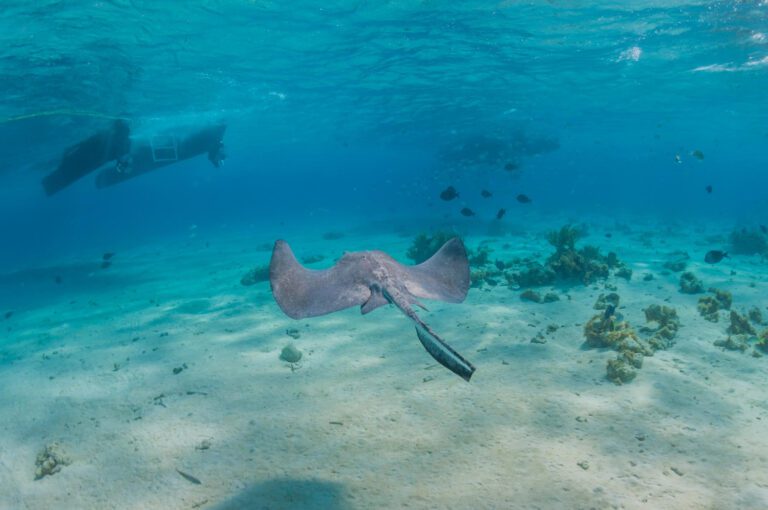
When photographing manta rays, it’s important to be cautious and respectful. These gentle creatures are part of a delicate marine ecosystem, and it is our responsibility to protect them. By being mindful, we can enjoy capturing beautiful moments while also helping to preserve manta rays and their natural habitat for the future.
- Stay calm and don’t chase the manta rays to capture them
- Use a wide-angle lens to capture their full size
- Shoot with natural sunlight for clearer photos
- Be ready to capture smooth movements and feeding moments
- Keep a safe distance and respect marine life
Tips for an Unforgettable Manta Season Experience
- Booking in advance is the best option to avoid sell-out situations during the peak seasons.
- If your resort offers bookings with a marine biologist, you can have more of an educational experience throughout the entire manta ray season.
- A training session with safety gear is provided for confident swimmers aged 9 and above.
- Maintaining a respectful distance is required, as touching can cause a local fine.
If you’re an ocean enthusiast, holiday packages in the Maldives are designed around manta ray season so you can experience these incredible creatures at the right time. Even you can customize your travel package with Travelco Holidays
Frequently Asked Questions
What is the best time to see manta rays in the Maldives?
May to November is the best time to see manta rays in the Maldives.
When should one avoid visiting the Maldives?
During the rainy season. Between September and October.
What time of day are manta rays most active?
The best time to see manta rays up close is at night